cancer evolution
& Immunology

birkbak group

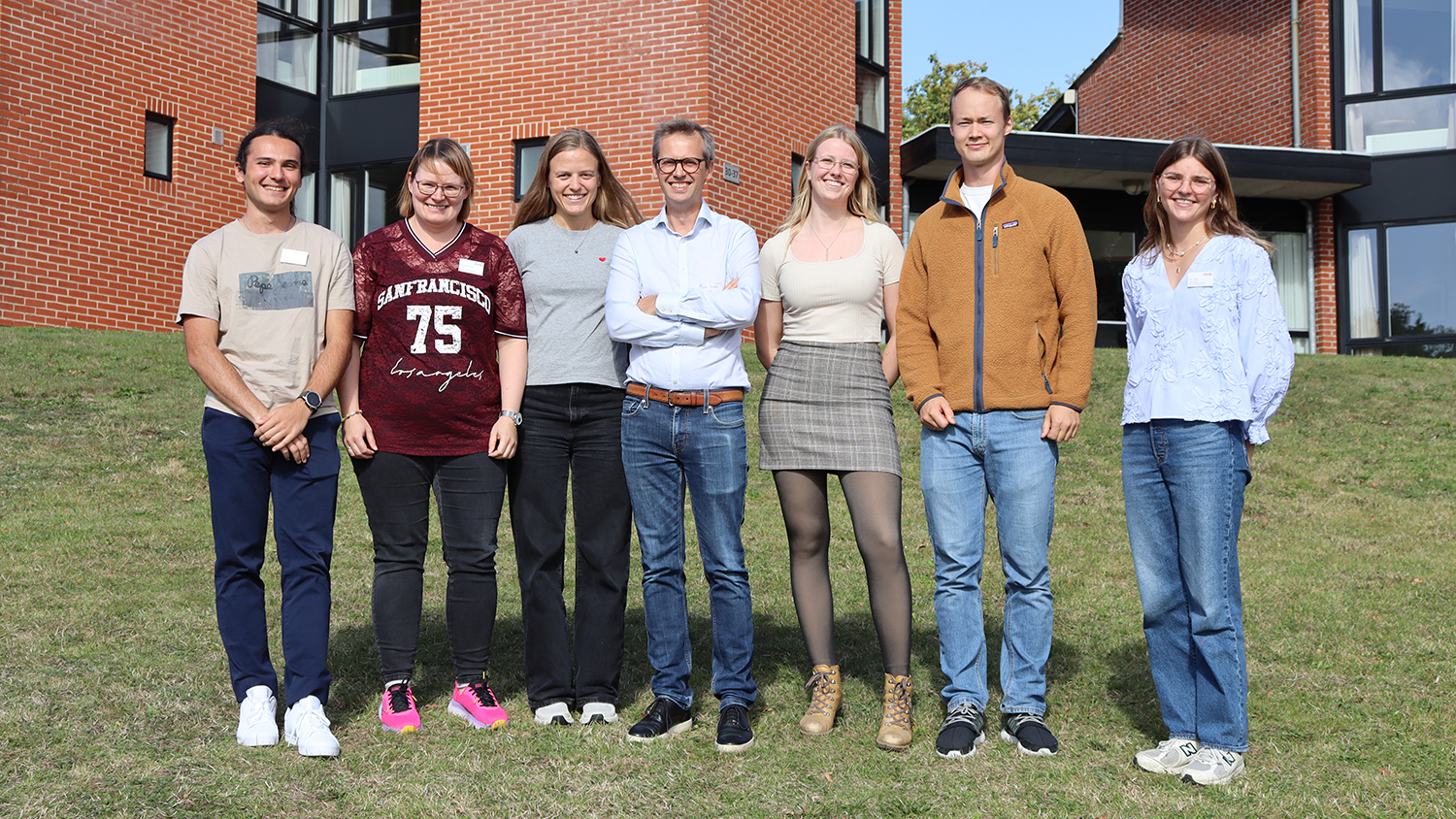
Group of seven young adults standing on grass in front of modern brick buildings, smiling at the camera.

Our research

We apply computational approaches to study how the immune system and particularly age-related immune decay affect general health, cancer development, progression and treatment response. 

Our mission is to understand cancer-immune interaction and cancer evolution at the molecular level, and to build tools and develop methods that use this information to improve patient treatment. 

Nicolai Birkbak has a background in cancer biology, biomarker development, translational cancer research and cancer evolution and heterogeneity based on research undertaken at TechnicalUniversity of Denmark (PhD and postdoc), Dana-Farber Cancer Institute (postdoc), and University College London & the Francis Crick Institute (senior postdoc).

Nicolai Juul Birkbak at Google Scholar

The thymus and immune health

The immune system undergoes profound changes throughout life, yet individuals age immunologically at remarkably different rates. This variation in immune decay, or immunosenescence, influence the body’s ability to respond to infection, prevent cancer, maintain tissue homeostasis, and recover from disease. Understanding why immune health declines in some individuals but is preserved in others is a central question in our research. 

Our goal is to develop quantitative measures of immune health that can be integrated into clinical medicine. By combining artificial intelligence, medical imaging, population-scale cohorts, molecular profiling, and clinical data, we study how the immune system changes across the lifespan and how these changes influence health and disease. Our current work focuses on the thymus, a central immune organ responsible for generating new T cells. Although the thymus gradually involutes from early life, this process is highly heterogeneous, with some individuals maintaining thymic function for decades while others experience accelerated decline. 

Our research has shown that preserved thymic health is associated with lower risk of cardiovascular disease, reduced cancer incidence, and improved overall survival. In patients with cancer, thymic health is also associated with response to immunotherapy, treatment-related toxicity, and clinical outcome. Together, these findings identify the thymus as a clinically relevant marker of immune health and provide a foundation for developing broader approaches to measure, understand, and ultimately preserve immune function throughout life.

The thymus and immune health
The thymus and immune health. © Nicolai Birkbak

Cancer evolution and immune health

Key steps in carcinogenesis, © Nicolai Birkbak

Cancer develops through a continuous process of evolution, driven by the acquisition of genetic alterations and shaped by selective pressures within the host. Understanding how normal cells transform into invasive and metastatic disease remains a central challenge in cancer research and has been a long-standing focus of ourwork.

Advances in next-generation sequencing and large, clinically annotated patient cohorts have transformed our understanding of cancer genomes, revealing the evolutionary trajectories and molecular mechanisms that underlie tumour development. While these studies have identified many of the genetic alterations that drive cancer, they have also highlighted that tumour genetics alone cannot fully explain why cancers arise, progress, metastasize, or respond to treatment.

Our research therefore combines cancer genomics with immunosenescense and immune health. We investigate how variation in immune function influences cancer evolution, from early tumour suppression and immune surveillance to metastatic dissemination and response to therapy. This includes developing computational approaches to integrate molecular tumour profiling with quantitative measures of host immune health, allowing us to study the dynamic interaction between evolving cancer cells and the immune system. 

By combining tumour-centric and host-centric perspectives, we aim to better understand the biological processes that determine cancer risk, disease progression, and treatment outcome, and to identify new opportunities for precision oncology.

Immune health biomarkers

A major goal of our research is to develop quantitative biomarkers that capture the functional state of the immune system. Unlike conventional biomarkers that focus on the tumour itself, our approach aims to measure the host immune system and its capacity to prevent disease, respond to therapy, and maintain long-term health. 

Our current work focuses on biomarkers of thymic health and adaptive immune function. Together with Professor Aerts group at Harvard, we have used artificial intelligence applied to routine CT scans and developed imaging-based measures of thymic health that provide a non-invasive assessment of immune ageing at population scale. We complement these approaches with molecular measurements of thymic output, including T-cell receptor excision circles (TRECs), T-cell receptor repertoire diversity, and other immune profiling technologies to characterize immune competence from multiple perspectives. 

Host factors for carcinogenesis, © Nicolai Birkbak

By integrating imaging, molecular profiling, and clinical data across large patient cohorts, we investigate how immune health influences disease risk, cardiovascular health, cancer development, and treatment response. Ultimately, we aim to establish clinically accessible biomarkers that enable immune health to become a measurable component of precision medicine, supporting risk stratification,treatment selection, and disease prevention.

Software

Defining cGAS-STING activity in cancer

https://github.com/mxs3203/csg_prediction

Original publication: Classifying cGAS-STING activity links chromosomal instability with immunotherapy response in metastatic bladder cancer

GENIUS: Multiomics data analysis based on spatial transformation

https://github.com/mxs3203/genome_mapped_to_image

Original publication:GENIUS: GEnome traNsformatIon and spatial representation of mUltiomicS data

Group leader

Nicolai Birkbak

Professor, PhD, MSc, Group leader

People

Asbjørn Kjær Attermann

PhD, MSc

David Martín Pestaña

PhD student

Diego Núñez Martínez

MSc

Elise Ledet Jensen

PhD student, MSc

Ida Maria Hemdorff Eriksen

PhD student

Magnus Enevoldsen

PhD student, MSc

Martyna Stankevičiūtė

MSc

Naja Lange

PhD student

Nicolai Birkbak

Professor, PhD, MSc, Group leader

Ragnhild Liborius Laursen

Postdoc

Randi Istrup Juul

Postdoc, PhD, MSc

Sebastian Steenstrup Dyhr

MSc

Collaborations

AIM - Artificial Intelligence in Medicine Program

We are actively collaborating with the Harvard-based AIM program, led by Professor Hugo Aerts. Here we particularly work on development and application of AI-based methods for image and sequence analysis, and for assessment of immune-health.

TRACERx

Logo TracerX

We are very excited to be part of the UK-based TRACERx (Tracking Cancer Evolution Through Therapy) consortium, tracerx.co.uk, led by Professor Charles Swanton at the Francis Crick Institute, London, UK.
Here we particularly contribute to the analysis of ctDNA-based phylogenetic tracking of cancer evolution during therapy.

Selected Publications

Thymic health and immunotherapy outcomes in patients with cancer.

Bernatz S, Prudente V, Pai S, Attermann AK, Di Federico A, Rowan A, Veeriah S, Dyrskjøt L, Nürnberg L, Alessi JV, Ott PA, Sharon E, Hackshaw A, McGranahan N, Abbosh C, Mak RH, Bitterman D, Awad M, Ricciuti B, Swanton C, Jamal-Hanjani M, Birkbak NJ, Aerts HJWL.

Nature. 2026 Apr;652(8111):995-1003. doi: 10.1038/s41586-026-10243-x. Epub 2026 Mar 18. PubMed

Thymic health consequences in adults.

Bernatz S, Prudente V, Pai S, Attermann AK, Cao Y, Chen J, Lyass A, Foldyna B, Nürnberg L, Bressem K, Abbosh C, Swanton C, Jamal-Hanjani M, Lu MT, Murabito JM, Lunetta KL, Birkbak NJ, Aerts HJWL.

Nature. 2026 Apr;652(8111):986-994. doi: 10.1038/s41586-026-10242-y. Epub 2026 Mar 18. PMID: 41851466; PMCID: PMC13102717. PubMed

Low T cell diversity associates with poor outcome in bladder cancer: A comprehensive longitudinal analysis of the T cell receptor repertoire. Kjær A, Kristjánsdóttir N, Juul RI, Nordentoft I, Birkenkamp-Demtröder K, Ahrenfeldt J, Strandgaard T, Radif D, Hodgson D, Abbosh C, Aerts HJWL, Agerbæk M, Jensen JB, Birkbak NJ$, Dyrskjøt L
Cell Rep Med. 2025 Apr 29:102101. doi: 10.1016/j.xcrm.2025.102101. PMID: 40315845 PubMed

Prospective validation of ORACLE, a clonal expression biomarker associated with survival of patients with lung adenocarcinoma. Biswas D, Liu YH, Herrero J, Wu Y, Moore DA, Karasaki T, Grigoriadis K, Lu WT, Veeriah S, Naceur-Lombardelli C, Magno N, Ward S, Frankell AM, Hill MS, Colliver E, de Carné Trécesson S, East P, Malhi A, Snell DM, O'Neill O, Leonce D, Mattsson J, Lindberg A, Micke P, Moldvay J, Megyesfalvi Z, Dome B, Fillinger J, Nicod J, Downward J, Szallasi Z; TRACERx Consortium; Hackshaw A, Jamal-Hanjani M, Kanu N, Birkbak NJ, Swanton C.
Nat Cancer. 2025 Jan 9. doi: 10.1038/s43018-024-00883-1. PMID: 39789179 PubMed

Exploring the molecular landscape of cancer of unknown primary: A comparative analysis with other metastatic cancers. Andersen L, Christensen DS, Kjær A, Knudsen M, Andersen AK, Laursen MB, Ahrenfeldt J, Laursen BE, Birkbak NJ. Molecular Oncology. 2024 May 15. doi: 10.1002/1878-0261.13664. PubMed

Body composition and lung cancer-associated cachexia in TRACERx. Al-Sawaf O, Weiss J, Skrzypski M, Lam JM, Karasaki T, Zambrana F, Kidd AC, Frankell AM, Watkins TBK, Martínez-Ruiz C, Puttick C, Black JRM, Huebner A, Bakir MA, Sokač M, Collins S, Veeriah S, Magno N, Naceur-Lombardelli C, Prymas P, Toncheva A, Ward S, Jayanth N, Salgado R, Bridge CP, Christiani DC, Mak RH, Bay C, Rosenthal M, Sattar N, Welsh P, Liu Y, Perrimon N, Popuri K, Beg MF, McGranahan N, Hackshaw A, Breen DM, O'Rahilly S, Birkbak NJ$, Aerts HJWL$; TRACERx Consortium; Jamal-Hanjani M$, Swanton C$. Nature Medicine. 2023 Apr;29(4):846-858. doi: 10.1038/s41591-023-02232-8. PMID: 37045997. Pubmed

Tracking early lung cancer metastatic dissemination in TRACERx using ctDNA. Abbosh C, Frankell AM, Harrison T, Kisistok J, Garnett A, Johnson L, Veeriah S, Moreau M, Chesh A, Chaunzwa TL, Weiss J, Schroeder MR, Ward S, Grigoriadis K, Shahpurwalla A, Litchfield K, Puttick C, Biswas D, Karasaki T, Black JRM, Martínez-Ruiz C, Bakir MA, Pich O, Watkins TBK, Lim EL, Huebner A, Moore DA, Godin-Heymann N, L'Hernault A, Bye H, Odell A, Roberts P, Gomes F, Patel AJ, Manzano E, Hiley CT, Carey N, Riley J, Cook DE, Hodgson D, Stetson D, Barrett JC, Kortlever RM, Evan GI, Hackshaw A, Daber RD, Shaw JA, Aerts HJWL, Licon A, Stahl J, Jamal-Hanjani M; TRACERx Consortium; Birkbak NJ$, McGranahan N, Swanton C. Nature. 2023 Apr;616(7957):553-562. doi: 10.1038/s41586-023-05776-4. PMID: 37055640. Pubmed

GENIUS: GEnome traNsformatIon and spatial representation of mUltiomicS data. Sokač M, Kjær A, Dyrskjøt L, Haibe-Kains B, Aerts HJWL, Birkbak NJ (2023) eLife. 2023. Sep 5:12:RP87133. doi: 10.7554/eLife.87133. PMID37669321. Pubmed

Treatment represents a key driver of metastatic cancer evolution. Christensen DS, Ahrenfeldt J, Sokač M, Kisistók J, Thomsen MK, Maretty L, McGranahan N, Birkbak NJ.
Cancer Res. 2022 Jun 22:canres.CAN-22-0562-E.2022. doi: 10.1158/0008-5472.CAN-22-0562. Online ahead of print. PubMed

Cancer Genome Evolutionary Trajectories in Metastasis. Birkbak NJ, McGranahan N. Cancer Cell. 2020 Jan 13;37(1):8-19. doi: 10.1016/j.ccell.2019.12.004. Review. PubMed

Artificial intelligence in cancer imaging: Clinical challenges and applications. Bi WL, Hosny A, Schabath MB, Giger ML, Birkbak NJ, Mehrtash A, Allison T, Arnaout O, Abbosh C, Dunn IF, Mak RH, Tamimi RM, Tempany CM, Swanton C, Hoffmann U, Schwartz LH, Gillies RJ, Huang RY, Aerts HJWL.CA. Cancer J Clin. 2019 Mar;69(2):127-157. doi: 10.3322/caac.21552. Epub 2019 Feb 5. Review. PubMed

Graduations

Name
Title
Year
Grade
Magnus Enevoldsen
Systemic Inflammation as a Shared Determinant of Thymic Health in Non-Small Cell Lung Cancer
2026
MSc
Diego Núñez Martínez
Ribosomal DNA Copy Number Variation and its Multi-Omic Implications in Cancer
2026
MSc
Sebastian Dyhr
Impact of age, sex and obesity on cancer biology
2026
MSc
Elise Ledet Jensen
Modeling and Exploring Immune Aging from Single Cell Transcriptomic Data
2026
MSc
Asbjørn Kjær Atterman
Systemic immunity in cancer - Exploring age-related biomarkers of the systemic immune system for prognostication in cancer
2026
PhD
Laura Andersen
Liquid Biopsies for Early Cancer Detection. Computational Analysis of Sequencing Data to Explore Cancer Biology and Detect circulating tumor DNA
2025
PhD
Elías Calandra Jiménez
Complex rearrangements and extrachromosomal circular DNA in colorectal cancer
2025
MSc
Chongming Chen
Pan-Cancer Exploration of rDNA Copy Number and Its Clinical and Immunological Significance
2025
MSc
Sikim Chakraborty
Unsupervised Contrastive Learning for Thymus Characterization in Thoracic CT Imaging
2025
MSc
Liliane Zoe Bader
Investigating the BCR in bladder and kidney cancer to understand its role in anti-cancer immunity and its potential implications for cancer treatment and outcomes
2025
MSc
David Martín Pestaña
Use of Deep Learning models for the analysis of scRNA-seq data
2025
MSc
Sara Elna Valentin
Novel method to examine strong cancer driver mutations
2024
MSc
Sofie Poder Jørgensen
Exploration of Immune Cell Type Composition and How It Relates to Biological Age
2024
MSc
Naja Lange
Explore the impact of immune health on cancer outcome
2024
MSc
Christian Bjødstrup Rygaard
Using the GLIPH2 algorithm to analyze TCR specificity in cancer patients
2023
MSc
Judit Kisistók
Exploring the biology and clinical utility of circulating tumor DNA
2023
PhD
Ditte Siggaard Christensen
Deciphering the evolution of metastatic cancer
2023
PhD
Mateo Sokač
Artificial Intelligence in Medicine: Using machine learning to improve patient stratification for precision medicine
2022
PhD
Asbjørn Kjær
Establishing a pipeline for analysis of T-cell receptor sequencing data and characterizing the impact of the T-cell repertoire on the clinical outcome of bladder cancer
2022
MSc
Laura Andersen
Characterizing the role of tumor growth dynamics and proliferation in ctDNA release
2022
MSc
Janne Engestoft
Identifying Copy Number Signatures by Latent Dirichlet Allocation
2022
MSc
Mateo Sokač
Utilization of Artificial Intelligence Towards Precision Medicine: Interplay Between Chromosomal Instability and Immune System
2020
part A / MSc

Bioinformatics groups

Smiling bald man with gray beard wearing a black blazer over a red patterned shirt standing in a modern office hallway.

skou Pedersen Group

computational genomics & transcriptomics

Link her
Smiling man wearing glasses, a light blue button-up shirt, and jeans standing with hands in pockets in a modern indoor hallway.

Birkbak Group

cancer evolution & Immunology

Link her
Man with glasses wearing a purple long-sleeve polo shirt and black pants standing indoors with hands in pockets.

Besenbacher Group

computational genomics

Link her